

























































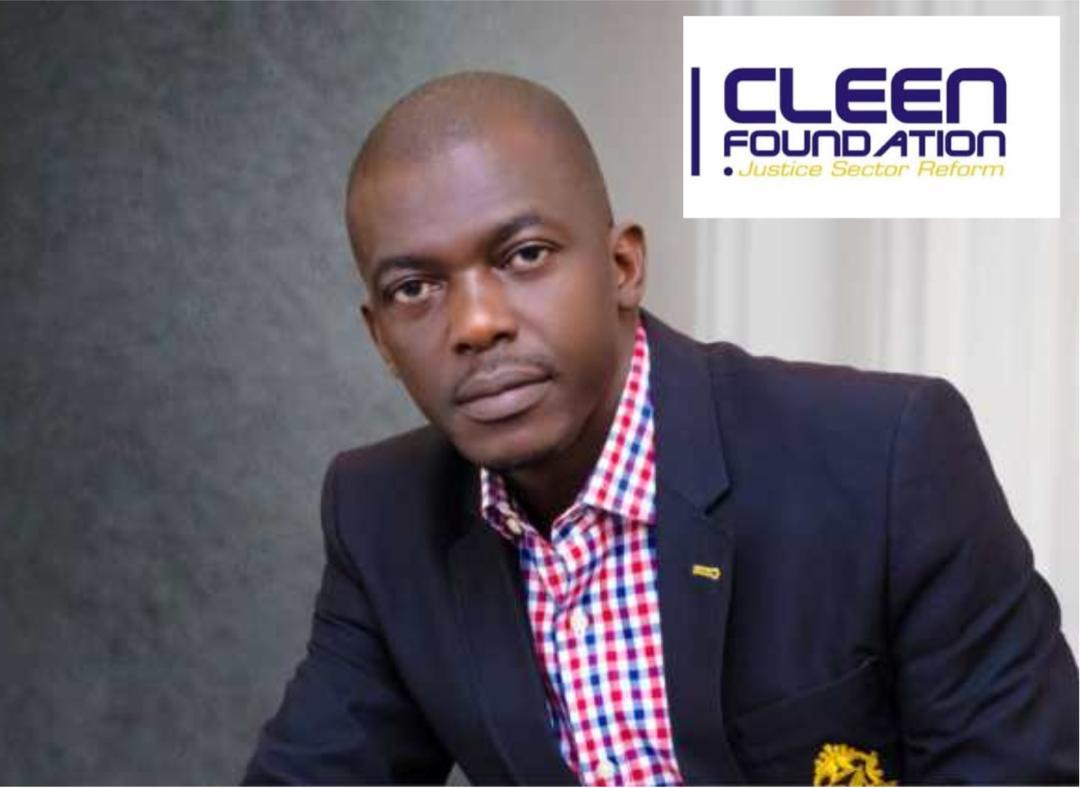
The Executive Director of the Centre for Law Enforcement Education (CLEEN) Foundation, Gad Peter has said that based on the provisions of the Administration of Criminal Justice Act (ACJA) 2015, women are empowered to stand for suspects as Surties in a bail application.
Previously, Nigerian women were not allowed to stand as sureties for suspects applying for bail in courts or with the police.
Mr Peter said this in his welcome remarks during a step-down training for stakeholders on the implementing ACJA at Chartwell Hotel in Bauchi on Monday.
He said the training was designed to bring relevant stakeholders on ACJA implementation in Bauchi State together for mentorship and robust discussion on their individual and collective roles and challenges in the implementation of the act in the state.
Our correspondent reports that through similar training sessions with support from the MacArthur Foundation, CLEEN Foundation trained many stakeholders in the administration of justice to be conversant with ACJA in Edo, Delta, Sokoto, Katsina, Jigawa, Kwara and Cross Rivers states.
Bauchi State domesticated the Administration of Criminal Justice Law (ACJL) in December 2022 following the assent of the state Governor Bala Abdulkadir Mohammed to the bill enacting ACJL after the state House of Assembly passed it.
He said in our quest to ensure that the wheels of justice turn smoothly, it is paramount that those who are entrusted with upholding the law and administering justice are equipped with the latest tools, knowledge, and insights.
To him, the training embodies divergent relevant resources on this dynamic platform, experiences, expertise, and perspectives converge to pave the way for enhanced practices and outcomes in the criminal justice landscape.
Peter said that the trainees, as criminal justice actors, individually and collectively hold a unique role that extends far beyond mere legalities and procedures.
“You are the guardians of rights, the stewards of due process, and the voices for those who often stand voiceless. It is with this profound responsibility in mind that we have gathered here today, united in our commitment to excellence and equity”, the Executive Director said.
He said the trainees would have the opportunity during the training to delve into a diverse range of topics, engage in interactive discussions, and exchange invaluable insights with their peers.
The Executive Director added the knowledge you acquire and the skills you hone will undoubtedly ripple through courtrooms, correctional facilities, and law enforcement agencies, shaping the essence of our criminal justice system.
He pointed out that the training will guide the participants towards a future where fairness, transparency, and rehabilitation stand as pillars of collective efforts.
Mr Peter said as we embark on this enriching journey of learning, collaboration, and empowerment, let us keep in mind the countless lives that stand to benefit from the strides we take here.
Speaking to our reporter, the State Coordinator of the National Human Rights Commission, Dala Yachit represented by Mr Ortese Felix Mimi of the commission, said with the introduction of ACJA fewer cases of human rights violations are being recorded.
She said that with the coming of ACJA, the police and other law enforcement agencies are using the Act which has led to a reduction in violations of the rights of the citizens.
Mrs Yachit said that the ACJA has helped very well and expressed optimism that if compliance with the Act is sustained, there will be so significant reduction in human rights violations of both the offender and the offended.