






























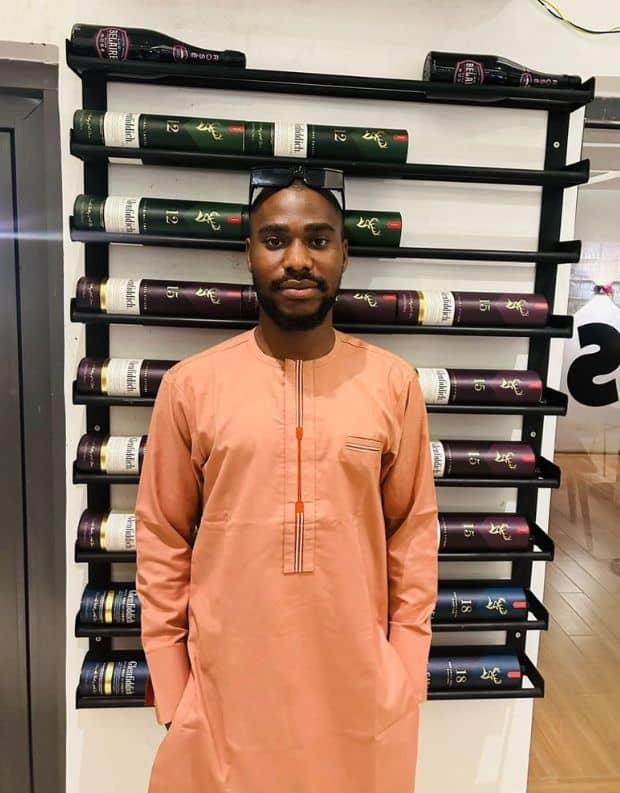
From Activist to Fugitive Lawson Akposkho, a name that has stirred controversy and intrigue in equal measure, remains an enigmatic figure in Nigeria’s socio-political and criminal landscape.
Born in Benin City, Edo State, Nigeria, Lawson grew up amidst the rich cultural heritage of the Edo people. His name was once synonymous with activism and advocacy, particularly in the LGBTQ+ community, but over time, it became entangled with allegations of occult practices and violent cult-related activities.
A Controversial FigureAkposkho’s early years were marked by a deep interest in spirituality and activism. He was a well-known Edo occultist, engaging in mystical and esoteric practices that some regarded as a blend of traditional Edo spirituality and modern interpretations of occultism.
However, his rise to prominence was not solely due to his spiritual learnings. Akposkho was also a vocal advocate for LGBTQ+ rights, a stance that put him at odds with Nigeria’s staunchly conservative and largely homophobic society.
As an LGBTQ+ activist and campaigner, he often challenged the repressive laws and social norms that criminalized same-sex relationships. In a country where LGBTQ+ individuals face severe persecution, Akposkho’s defiance made him a target. It was not just his activism that drew the attention of law enforcement agents but his alleged involvement in violent cult activities placed him on the radar of the authorities.
Wanted in Benin City for years:
Police in Benin City sought Akposkho in connection with cult-related violence. He was implicated in numerous violent activities, accused of terrorizing the good people of Benin alongside other cult members. Reports linked him to underground movements that engaged in extortion, intimidation, and even blood rituals. Despite these allegations, he remained elusive, often slipping through the fingers of law enforcement.
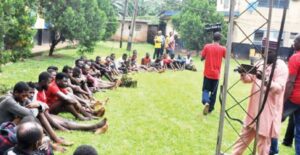
Pic: Edo State grapples with cult activities in benin city. The Arrest at a Gay Wedding in Warri
Nigerian police arrested more than 100 people at a wedding on Monday, in one of the biggest mass arrests in recent years targeting the country’s LGBTQ community.
A police spokesperson in the southern Delta state told reporters Tuesday that 67 people will be prosecuted for “allegedly conducting and attending a same-sex wedding ceremony. ”Same-sex relationships are criminalized in Nigeria, and its penal code approves a punishment of up to 14 years in prison for people who are convicted of entering into a same-sex civil union.
In a live broadcast on Tuesday, a police official described the event as evil and “we cannot copy the western world… we are Nigeria and we must follow the culture of this country.” Behind him were the suspects, some of whom told journalists in the live broadcast that they were not gay and were models and fashion designers.
Amnesty International Nigeria condemned the situation as “a witch-hunt.” It called on Delta state police to release the detained people, who were “arrested and paraded to the media” and to “put an immediate end to this witch-hunt,” in a statement on X, formerly known as Twitter.“
In a society where corruption is rampant, the law banning same sex relationships is increasingly being used for harassment, extortion and blackmail of people by law enforcement officers and other members of the public. This is unacceptable,” the human rights group added.
Police said a video recording of the wedding party and alleged prohibited substances were obtained during the raid. “The venue of the illicit event was searched, and the following items were recovered at the scene: one codeine bottle, three cups of refined Canadian loud, five sachets of SK, one sachet of tramadol, four tablets of molly drug, one crusher, gay marriage ceremonial dresses,” a police statement said.
The statement added that police got wind of the event after operatives on routine patrol stopped an attendee late Sunday. “He had claimed to be an actor, the statement said. “Upon interrogation, he confessed that he is a member of a certain gay club and that he was on his way to join his fellow members for a gay marriage ceremony,” the statement said.
This latest arrest comes five years after 57 men accused of homosexuality were arrested during a police raid on a hotel in Lagos in 2018.
On an unsuspecting evening in Warri, Delta State, a police raid led to the mass arrest of over 200 individuals attending a gay wedding. Among those detained was Lawson Akposkho.
The Nigerian police, under strict anti-LGBTQ+ laws, saw the event as an illegal gathering and swiftly moved to clamp down on attendees. A police spokesperson later announced that 67 individuals would face prosecution for allegedly conducting and attending the same-sex ceremony.
Amnesty International and other human rights groups condemned the arrest, calling it a “witch-hunt” against an already marginalized community. Nonetheless, Lawson Akposkho’s presence at the event brought renewed scrutiny to his past activities, leading to further investigations into his alleged cult affiliations and criminal background.
Breaking Bail and Vanishing Without a trace after his arrest, Akposkho was granted bail.
However, on December 1st, 2023, he disappeared without a trace, breaking his bail conditions and evading the authorities. His whereabouts remain unknown, sparking speculation about whether he had fled the country or gone underground within Nigeria.
When our correspondent contacted his family, emotions ran high. They expressed immense disappointment and anger over what they perceived as his disgraceful actions.
His family categorically disowned him, with only his father standing by him, as is customary in many African traditions. “He is a taboo to this family,” a relative stated emphatically, reflecting the deep sense of shame his actions had brought upon them.
Granted bail conditions for LGBTQ+ in Warri High Court. The case of Lawson Akposkho has ignited heated debates across Nigeria. For some, he represents the struggle for LGBTQ+ rights in a nation that refuses to recognize their existence. For others, he is a dangerous fugitive, involved in nefarious activities that threaten public safety. The Nigerian police continue their search, urging anyone with information about his whereabouts to come forward.
Meanwhile, the larger LGBTQ+ community remains under threat, with many fearing further crackdowns and mass arrests. The case highlights the ongoing tension between human rights advocacy and the conservative legal and cultural landscape of Nigeria.
As the search for Akposkho continues, one question lingers: Will he resurface, or has he vanished into the shadows forever?