































In recent days, social media has been animated with comparisons between Agbu Kefas of Taraba State and Ahmadu Umaru Fintiri of Adamawa State, particularly in the area of visible physical infrastructure. Roads are being counted. Buildings are being photographed. Flyovers are being invoked as proof of seriousness. It is an energetic debate. It is also a conversation that requires context.
The first principle of any honest comparison is time.
Governor Fintiri is serving a second term. That represents nearly eight cumulative years of budget cycles, fiscal planning, procurement continuity, contractor stability, and policy maturation. Such duration allows major projects to be conceptualized, financed, redesigned, and completed. It allows revenue reforms to mature into visible structures. It permits refinement between first and second term execution.
Governor Kefas is still within his first term.
This is not a trivial detail. It is the central variable in the conversation.
Infrastructure does not materialize from rhetoric; it follows a sequence. There is a fiscal assessment, an inherited liability review, revenue recalibration, contractor verification, debt exposure analysis, and alignment with medium-term expenditure frameworks. Only after these does visible concrete materialize.
To compare a first-term Governor with a two-term governor without adjusting for time is to compare foundations with finished projects.
It is also necessary to state, calmly and without theatrics, that Governor Kefas inherited significant liabilities from the previous administration. Those liabilities were not weaponized for sympathy, amplified for outrage, or made the subject of dramatic briefings to trade blame for headlines.
Instead, the administration absorbed the pressure and concentrated on reform.
Financial obligations were audited. Structural gaps were studied. Institutional weaknesses were identified. The choice was correction over complaint.
One of the clearest demonstrations of that reformist approach is the reinstitution of pension and gratuity payments after thirteen years of neglect. The administration commenced with the release of one billion naira to offset outstanding gratuities dating back to 2011. This was followed by a structured monthly release of two hundred million naira to steadily reduce the backlog. More recently, five billion naira was approved and released to further settle gratuity obligations. This is not decorative governance. It is restorative governance.
What should be examined in a first term is not merely the number of flyovers completed. It is the direction of governance. It is whether the financial architecture of the state is being strengthened in a sustainable manner.
A governor in his first term faces defining choices. Does he pursue immediate visual validation, or does he stabilise wages, settle inherited obligations, reform institutions, and rebuild confidence within the civil service before expanding aggressively?
Taraba’s trajectory reflects a deliberate sequence.
A serious administration does not build on financial uncertainty. It builds on order. Order in payroll. Order in pension administration. Order in education financing. Order in institutional management.
Beyond fiscal reforms, security has witnessed measurable improvement. The current security status of the state reflects coordinated intervention, renewed collaboration with security agencies, and a deliberate effort to restore public confidence. Stability is the first infrastructure of development. Without it, roads are symbolic. With it, investment becomes possible.
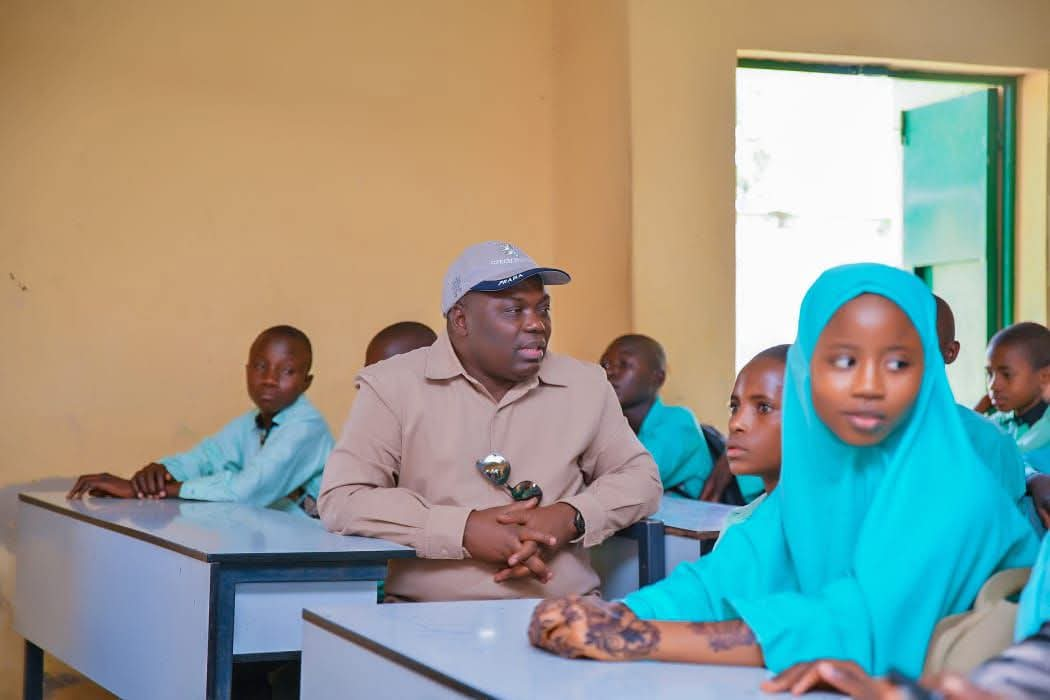
Education has also received structured attention. School infrastructure across the state is undergoing rehabilitation and expansion. Classrooms are being rebuilt. Learning environments are being restored. The aggressive drive toward free and compulsory education has significantly reduced the burden on families,parents no longer pay for WAEC and NECO. The number of out of school children has dropped dramatically, approaching negligible levels compared to previous realities. That is social infrastructure in its most powerful form.
States differ in revenue profile, debt exposure, inherited commitments, and fiscal starting points. These differences shape what is prudent in the early years of an administration.
Governance is not a sprint to dominate social media comparisons. It is a long game of institutional endurance.
There is a deeper question that deserves attention. What kind of infrastructure is a state prioritising in its formative years? Infrastructure of concrete alone, or infrastructure of capacity?
When a government restores gratuity payments after over a decade of neglect, strengthens security architecture, stabilises wages, reforms education, reform primary healthcare, boost agriculture, and rebuilds institutional confidence, it is not postponing development. It is reinforcing the base upon which durable expansion must stand. A distressed civil service cannot supervise complex projects. An insecure environment cannot attract capital. An underfunded education system cannot produce the technical workforce that sustains growth.
Foundations matter.
This conversation is not about diminishing any state. Every state operates within its own realities and rhythm. What matters is clarity of direction.
A two term administration reflects the maturity of time. A first term administration reveals seriousness through reform, discipline, and strategic sequencing.
The more meaningful inquiry is this. In its first term, is Taraba laying the groundwork for accelerated and sustainable infrastructure growth in subsequent years? Are fiscal controls stronger? Is institutional confidence higher? Is security more stable? Is social infrastructure expanding?
On these metrics, trajectory becomes the proper lens.
Public debate is healthy. Comparison is inevitable. Yet comparison must be anchored in context. Eight years and three years are not the same horizon. Cement laid after nearly a decade cannot be fairly measured against foundations still settling.
History rarely remembers who built the fastest. It remembers who built what endured.
So far, the administration has flagged robust infrastructure development across the state, with significant activity concentrated in Jalingo metropolis. More importantly, an infrastructural expansion phase is underway, anchored on a reformed fiscal base, improved security, and renewed institutional confidence.
If Taraba’s first term is judged by structural reform, fiscal steadiness, pension restoration, security stabilization, educational revolution and forward momentum, then the direction is clear.
The foundation has been laid. The revolution in infrastructure is unfolding.
Nelson C. Dimas
Special Adviser on Policy and Strategic Communications