






























When President Bola Tinubu appointed Bayo Ojulari as the new GMD of NNPC, he tasked him with implementing the bold mission of reposition the national oil corporation, which generates substantial revenue for developing all the federating units of Nigeria.
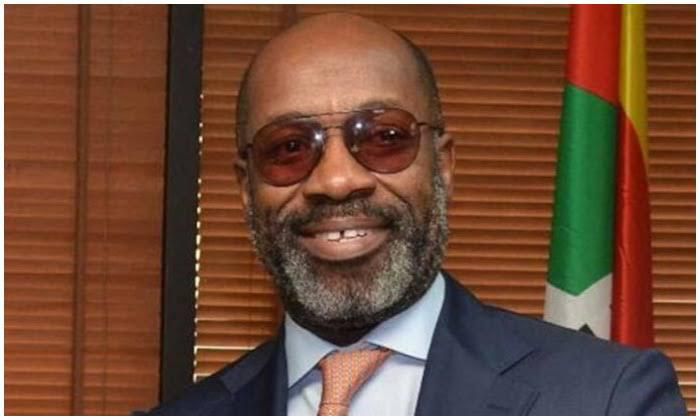
But a man who was appointed to support Ojulari in that role, Roland Ewubare, is now waging a senseless war against the management of NNPC. His sinister plot is simple: pull down the GMD with the hope of selling himself to the president as the only man standing for replacement.
This evil agenda must be resisted by all Nigerians. Not just because Ewubare cannot be allowed to take charge of a house he seeks to pull down, but because he doesn’t have the moral rectitude to even manage the institution in the first place.
Ewubare, who’s campaign to discredit the GMD is now full-blown, has raised alarms across industry and government circles because many people remember him from the disruption and corruption controversies he had caused in the past.
This is not the first time Ewubare’s name has been linked to disruption at the highest levels. During the tenure of Dr. Ibe Kachikwu, the man widely credited with bringing him into national energy leadership, Ewubare reportedly broke ranks. A similar attempt to unseat Mele Kyari as GMD of NNPC ended abruptly in 2020 after a covertly recorded conversation exposed internal manoeuvrings, prompting Ewubare’s resignation.
His name has also surfaced in connection with past financial controversies. In the federal government’s recovery of funds related to the Halliburton bribery case. Media reports identified Ewubare—then Executive Secretary of the National Human Rights Commission—as one of the individuals associated with an escrow account into which over $32.5 million (₦13.5 billion) was deposited.
The account, reportedly held at JPMorgan Chase under the name “Madison Avenue Escrow-CBN-FGN Litigation Settlement,” was not in the name of the Federal Government.
In 2023, a whistleblower alleged Ewubare’s involvement in a $280 million oil servicing fraud, which remained under investigation.
Yet it is his recent behaviour that has caused the greatest concern. In the lead-up to the appointment of a new Group Chief Executive Officer for NNPC Limited, Ewubare is reported to have lobbied aggressively—canvassing key figures in the Tinubu administration in hopes of securing the top job. When that effort failed, a new position was created for him: GCOO.
Even though the so-called COO appointment appears high-ranking, it does not grant him a seat on the company’s Board, as the Petroleum Industry Act (PIA) limits Executive Director positions to the GCEO and GCFO.
That lawful exclusion appears to have sent Ewubare into tailspin, fuelling his sinister campaign against the management.
Shortly after his appointment, Ewubare began placing close associates in strategic roles across the company, including within the office of the GCEO. He is believed to have cultivated influence in parts of the senior management team while quietly questioning the GCEO’s authority and leadership style—despite the fact that the GCEO was already earning praises for his operational discipline and transparency.
The situation escalated just days before a major strategy retreat, when blogs began publishing unverified claims about private jet expenses and politically motivated travel. The reports were false, but the damage was done.
Then came the moment that stunned the organisation: while the GCEO was live on stage during a company town hall, Ewubare submitted his resignation via text message. The timing was interpreted by many as an attempt to destabilise. Within hours, the GCEO revoked all system access and began moving to protect the company’s operations.
Days later, Ewubare began walking back the resignation, claiming it had been rejected by higher authorities. No formal statement ever supported that narrative. At a subsequent public event, he approached the GCEO in front of media cameras in what appeared to be a choreographed gesture of reconciliation. Few were convinced.
Since then, intelligence sources suggest that Ewubare has been coordinating external pressure using media proxies, contractors, and political allies. Operational instability in certain regions has coincided with these efforts, raising concern that there may be attempts to cast the GCEO as ineffective.
What’s at stake is no longer just internal cohesion at the NNPC. This is now a direct challenge to the President’s bold reform of Nigeria’s most strategic state enterprise.
President Tinubu was widely praised by Nigerians after he carefully selected and announced a new leadership for the NNPC to be led by Ojulari. Nigerians believed this decision will mark a turning point for the institution.
For the first time in recent memory, NNPC Limited is led by a group of seasoned professionals with deep technical expertise, international standing, and a clear mandate to run the company commercially. The decision to downplay political influence and elevate competence elicited widespread acclaim both domestically and abroad.
That this team is already being tested—not by failure or public opposition, but by internal sabotage—is not just unfortunate. It is telling.
Public commentators have described the current Board and Management as the most capable NNPC has ever had. Many believe that if this team cannot deliver the long-overdue transformation of the company, no one can.
What they need now is not interference or engineered instability, but the space, support, and protection to succeed.
This isn’t merely a test of corporate governance. It is a test of political will, national reform, and legacy.