









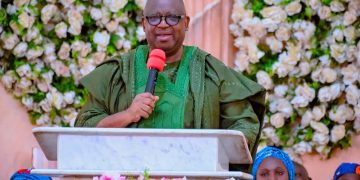



































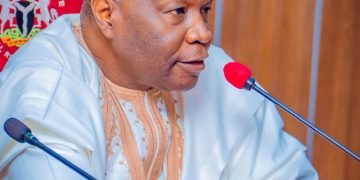














The House of Representatives on Wednesday considered a motion under Matters of Urgent Public Importance seeking a total waiver of outstanding COVID-19 survival loans owed by vulnerable households and micro-businesses across the country.
The motion, sponsored by the Member representing Bida/Gbako/Katcha Federal Constituency in the National Assembly, Rt. Hon. Saeed Musa Abdullahi (SMA), urged the Federal Government to take immediate humanitarian action in view of the rising economic hardship and the widespread inability of beneficiaries to repay the loans issued during the pandemic.
Abdullahi recalled that the Federal Government, through the Central Bank of Nigeria (CBN) and NIRSAL Microfinance Bank (NMFB), introduced the COVID-19 Targeted Credit Facility (TCF) to cushion the devastating economic impact of the global lockdown, disbursing ₦419.42 billion nationwide. The programme supported 792,936 beneficiaries, including 674,972 households, 117,964 small businesses, and 330,128 women, who received a combined ₦159.21 billion.
He noted that the intervention helped create or sustain 1.58 million jobs, underscoring its far-reaching social and economic value at the height of the pandemic.
However, SMA expressed deep concern that as of September 2023, ₦261.07 billion constituting about 62 percent of the loans remained unpaid. He also pointed to CBN data from Q4 2024 and Q2 2025 showing sharply rising loan defaults driven by inflation above 24 percent, food insecurity, erosion of purchasing power, widespread business closures, and shrinking household incomes.
The lawmaker highlighted that despite the large default numbers earlier reported, substantial recoveries were made through automatic deductions from beneficiaries’ bank accounts between late 2023 and December 2025. This, he argued, indicates that the actual outstanding balance may now be significantly lower and therefore fiscally manageable for a structured waiver.
Abdullahi stressed that the facility was conceived as a survival loan, not a standard commercial credit, and that many Nigerians used the funds for essential needs such as food, rent, school fees, and healthcare during the lockdown. “It is unrealistic to expect full repayment from households that have not recovered economically since the pandemic,” he said.
He cited domestic precedence such as the Anchor Borrowers Programme, where the Federal Government introduced restructuring and partial waivers despite high default rates. He also referenced global examples from the United States, Canada, Germany, South Africa, and India, where portions of pandemic-era support loans were forgiven outright.
Rt. Hon. SMA warned that the continuation of aggressive recoveries and automatic debits was inflicting severe hardship on low-income Nigerians, collapsing micro-enterprises, heightening unemployment, and potentially threatening social stability. He commended the Federal Government, CBN, and NMFB for the foresight shown in establishing the TCF, describing it as one of the most impactful social protection interventions in recent history.
Following deliberations, the House urged the Federal Government, through the CBN, NMFB, and relevant ministries, to suspend all ongoing deductions, grant total waivers for vulnerable households and micro-businesses still burdened by the loans, and restructure the SME component to safeguard jobs and prevent further business collapse. The relevant House committees were also directed to engage the implementing agencies to ensure transparent and equitable execution of the proposed relief measures.
Dodo Mustapha Alhaji
Senior Legislative Aide
December 10, 2025