


































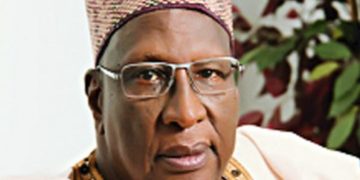


















The Chairman of the Kebbi State Standing Committee on Bio-Fuel, Muhammad Ka’oje, has said the bio-fuel project will augment the state’s Internally Generated Revenue (IGR) to the tune of N338 billion annually.
Mr Ka’oje, a former Minister of Science and Technology, made this known while briefing journalists in Birnin Kebbi on Monday.
The Kebbi State Government and Nigerian National Petroleum Corporation (NNPC), had on November 23, 2017, signed a Memorandum of Understanding (MoU) for ethanol bio-fuel production project in the state.
The project is being implemented in Gwazawa, Danko/Wasagu Local Government Area of the state.
Mr Ka’oje noted that the bio-fuel sourced from sugar would contribute substantially to the state’s revenue base.
“We are not producing bio-fuel for the sake of producing bio-fuel; but we have done our calculations, and our expectations if the project is completed, it will supplement the state’s IGR of N338 billion about one billion dollars, if we achieve our maximum target annually.
“It is our estimate and it can be more than that; and I am just talking about the cassava, but the bio-fuel from sugar is also going to contribute more substantially to the revenue of the state.
“That is the whole idea, to make the state self-content in the event of any eventuality,” he said.
He said the project will provide empowerment and employment opportunities to a number of people as it has a production line.
Mr Ka’oje said the state government had cultivated a total of 47,000 hectares of cassava to provide a source of raw material for the ethanol bio-fuel production.
“About 15, 000 hectares has been earmarked for bio-fuel projects; while 32,000 hectares will be used by out-growers to produce cassava.
“A lot of activities have taken place and now we are talking to the NNPC, as the next step is to prepare the machinery so that the production will commence soon,” he added.
The former minister disclosed that the committee had begun installation of equipment with capacity to generate alternative sources of energy to the host community as well as the production of ethanol.
“Nigeria has the potential to commence production of ethanol in large quantities for export especially from the northern part of the country,” he said.
Mr Ka’oje, however, said the project could not be completed according to the initial work plan due to the COVID-19 pandemic, adding that the committee would ensure completion of the project on time.