






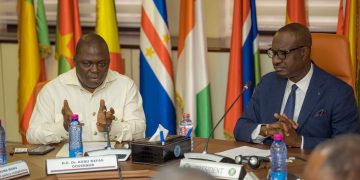


























The scientific debunking of the earlier report on Kano mass deaths came to the fore when the Verbal Autopsy Report, Retrospective Review of Case of Mortality Committee submitted its report to the governor of Kano state, Dr Abdullahi Umar Ganduje, at Africa House, Government House, Kano, Tuesday.


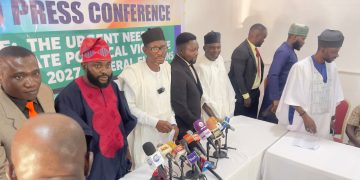
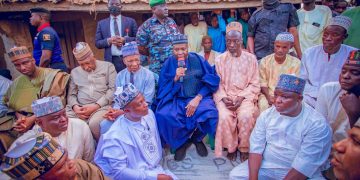
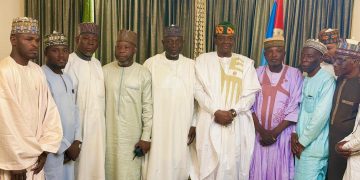
The report was read in the presence of top government officials, starting with the Deputy Governor, who doubles as the Chairman of the State Task Force on COVID-19 Committee, Dr Nasiru Yusuf Gawuna, Secretary to the State Government, commissioners and many development partners.
Prof Mukhtar Gadanya, who read out all parts of the report said “A retrospective study of mortalities was conducted over approximately 2-weeks (27th April – 15th May 2020); across 8 metropolitan LGAs (Gwale, Fagge, Tarauni, Kumbotso, Ungogo, Nassarawa, Kano Municipal and Dala).
According to him, the Mortalities in the identified Local Government Areas were line-listed, which made a provision for the questionnaire to be administered house to house.
To make it more scientific, he reveals that, as part the Committee’s scientific approach, that Mortalities reviewed were for a period of 1 month (1st April and 2nd May 2020).
While relatives of those who passed away, were interviewed by respective Ward Focal Persons (WFP), through also using a structure questionnaire into an electronic platform (ODK), he sheds light during the report presentation.
Challenged that, “Data from the questionnaire were reviewed for categorization into most probable causes of mortality by medical specialists using “two-symptoms” criteria (at least presence of two of any of fever, cough and shortness of breath)”
According to Professor’s account, on behalf of the Committee he made it clear that, their research suggests that, “…inter-play of various factors contributed to the “mysterious deaths” which causes this study shed light on.”
Buttressing the scientific nature of their report, Gadanya discloses that, “Mortality in community is cyclical and vary by seasons and months,” as he cited study on Dandolo Cemetery by “Murray Last. Dying by Design. Curare, 35(2012); 1+2; Pages 64-71.”
Disagreeing with an earlier report given, not by the State Verbal Autopsy Committee, he reveals that, “COVID-19 might have contributed in 15.9 % of the cases of mortality, but within the limitations of the verbal autopsy method, that cannot provide confirmation.
Main estimate: Suspect COVID-19 – 255 out of 1604 deaths or 15.9% [95% confidence interval: 14.1% to 17.8%]
Some deaths may be related to disruption of medical care and socio-economic activities due to fear of contracting COVID-19, which usually happen during epidemics.”
To further pose another scientific challenge, Prof. Gadanya argued “If the mysterious deaths were COVID-19 related, the deaths could have come more from local governments that have more COVID-19 cases.
Tarauni local government for example, with 100 confirmed COVID-19 cases is the 1st in pandemic ranking, but in the mysterious deaths it is rated 7th.”
Among those who impacted on the study, among the development partners were, WHO, UNICEF, DFID, NCDC, AFNET, E-HEALTH, among others. They all participated in the study and were present during report presentation.
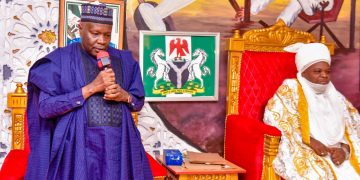
In his remarks, governor Ganduje congratulated the Committee for the good job, stressing that, “This report, which scientifically conducted, has put to rest all postulatations, predictions, permutations and all hues cries about the mysterious deaths.”
He commended other experts who participated in the study, adding that “When I went through the literature review, I understood how good the findings are.
So it is good for all to understand that any report that could not pass the test of validity and reliability, such report is misleading.”
The report, he promised “Will be communicated to President Muhammadu Buhari, to the Chairman of the Presidential Task Force, to the Minister of Health, and to the National Coordinator of the Technical Committee.”
He also hinted that, the report would be translated into Hausa for the consumption of the people at the grassroots, “…so that they would come to know the true situation and clearer picture.”
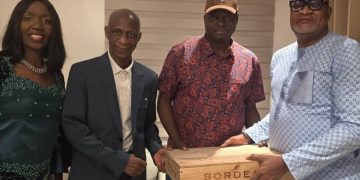
State Commissioner for Health, Dr Aminu Ibrahim Tsanyawa submitted the report to the governor.