

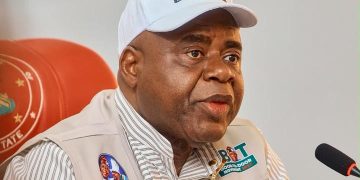
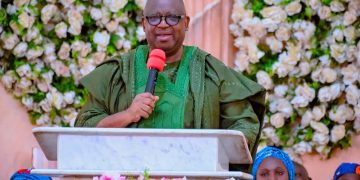


















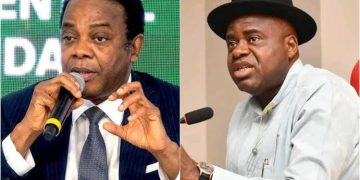


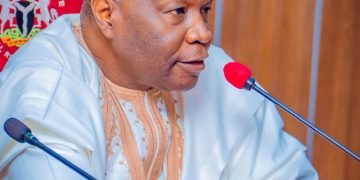









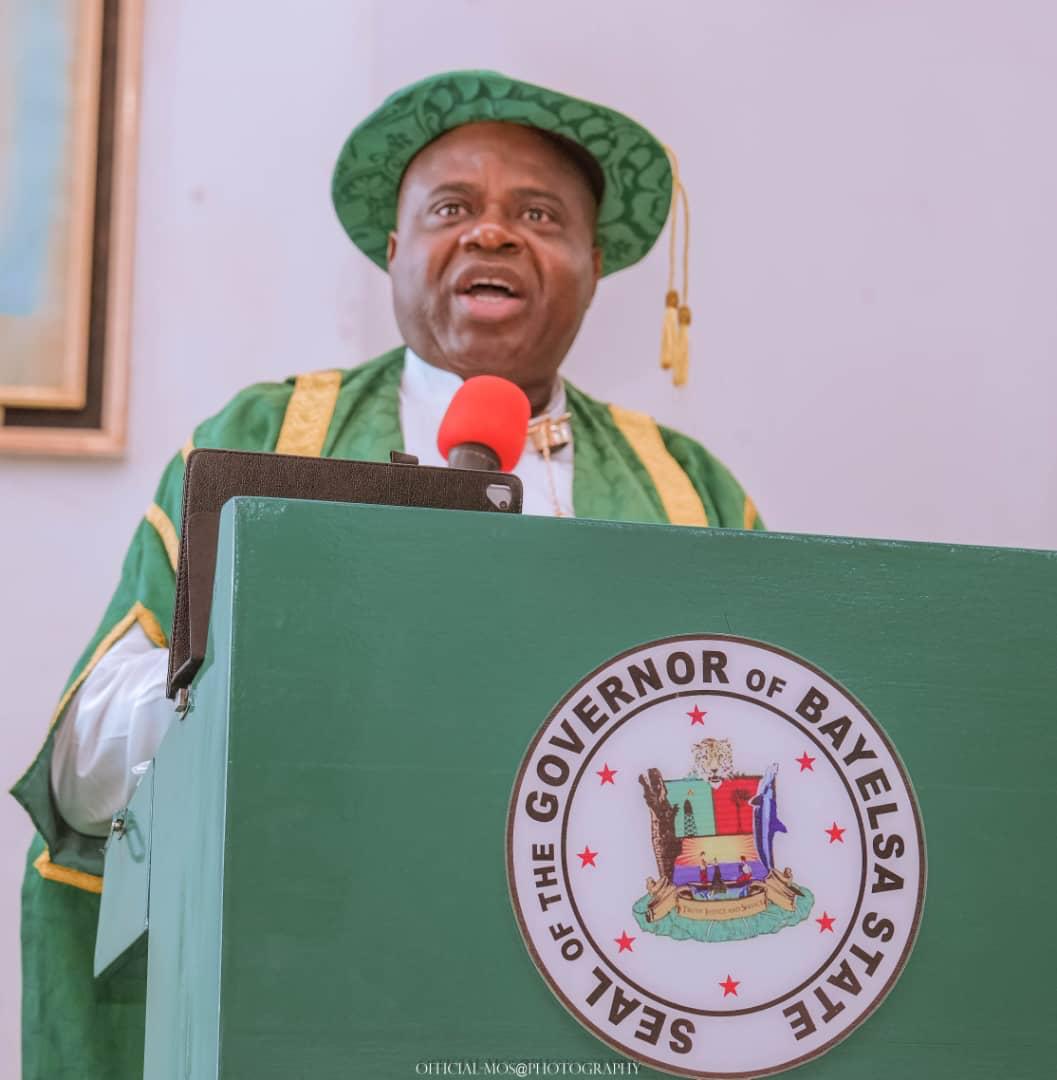
Senator Douye Diri, the Governor of Bayelsa State, criticised Nigeria’s form of Federalism on Wednesday, calling it abnormal for the Federal Government to be the only entity authorised to establish Local Governments.
Nigeria has to reverse its current course towards growth, according to Governor Diri.
The Bayelsa Governor asserted that States should be granted the constitutional authority to establish and enact laws pertaining to Local Governments in a truly Federal framework during his speech, “Rethinking Our Future: The Need For True Federalism and Economic Renaissance,” at the 64th Founders’ Day Lecture of the University of Nigeria in Nsukka, Enugu State.
He restated his conviction that equality, justice, and fairness are the only foundations upon which Nigerian unity can be maintained.
Federalism is a sensitive topic that affects Nigeria’s corporate existence, according to Governor Diri.
According to him, the fact that the concept of real Federalism has spread throughout Nigeria’s sociopolitical environment highlights how flawed the nation’s current governance structure is, which has given rise to ongoing unrest.
The guest lecturer emphasised the need for a paradigm shift so that Nigerians’ dreams and aspirations won’t be perpetually postponed and expressed concern that ethnic nationalities’ and minority interests’ misgivings about the injustices and disequilibrium that defined the political paradigm at the time of independence in 1960 still stand.
He asserts that the great majority of Nigerians do not deserve or desire the future that the country’s current governing structure is unable to provide.
The Governor of Bayelsa State stated that Nigeria has reached an important point in its history and that prudent choices must be made in order to decide the country’s course and ensure a prosperous future.
He emphasised that open discussions about how to build a more ideal union that values diversity and works towards shared objectives must take place among Nigerians.
A Federation is ideal when states voluntarily unite to form a nation, as in the case of the United States of America. Diri questioned Nigeria’s current Federalism, claiming that it was designed to serve the interests of the colonial overlords.
He recounted how Isaac Jasper Adaka Boro, an Ijaw and Niger Delta native, spearheaded minority rights activism in the nation, starting his revolutionary journey while serving as the Students Union Government President at the University of Nigeria in the 1964–1965 academic year.
In addition, he contended that despite being the engine of the Nigerian economy, the country’s oil-producing communities are impoverished as a result of the current governance framework, and he pushed for a review of the Land Use Act of 1978, calling it a paradox that no significant development can occur in an environment in which States lack authority over their resources.
The Governor went on to say that each State in Nigeria have distinct needs and natural resources, and that each should be free to manage these resources, use them, and grow at its own rate while still making a partial contribution to national government.
Citing recent events in Rivers State during the Local Government election and the Bayelsa situation in Bassambiri community during the 2023 governorship election, where police were used against the people, he also emphasised the necessity of State Police, asserting that States should have the authority to take control of their own security.
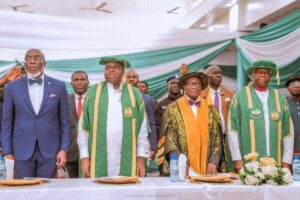
His said: “We are all aware of the ongoing conversation around the issue of autonomy of Local Governments. My concern over this sensitive subject is beyond the question of autonomy and more about the rationale for their creation. The current system, which allocates funds based on the number of Local Governments, puts some States, especially Bayelsa with just eight, at a disadvantage. This disparity arises because States with more Local Governments receive a larger chunk of resources, regardless of their specific requirements or financial strength.”
“Since the Constitution exclusively recognises states and the Federal Government as federating units, the Federal Government’s creation of Local Governments constitutes an aberration, undermining the principles of Federalism and State autonomy. The Constitution’s clear delineation of Federal and State powers renders the Federal Government’s creation of Local Governments incongruous, as local governance falls within the purview of State authority. My take to addressing this issue is enforcing States’ autonomy to create Local Government Areas tailored to their unique needs and financial capacity to do so.”
“In the context of Nigeria, the term “true Federalism” has become a rallying cry for those seeking autonomy, resource control, addressing issues of marginalisation and good governance. It is about moving away from a system that can properly be described as “Unitary Federalism” or a ‘federation without Federalism’.”
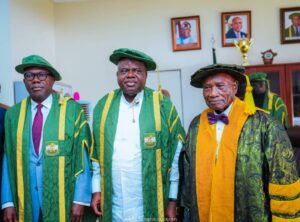
“For the avoidance of doubt, I wholeheartedly support the Nigerian State and its continuous unity and existence. However, I recognise that, like any nation, we strive for a more perfect union. A union where diversity is celebrated, equity ensured and opportunities are accessible to all.”
“Consequently, we must rethink our future and build a political culture where the promise of federalism is not a mere illusion of unity, but a powerful catalyst that drives our passion for success and unlocks untapped potential.”
The late Dr. Nnamdi Azikiwe, whose vision led to the institution’s formation on October 7, 1960, is one of the founding fathers of the UNN, according to Prof. Polycarp Chigbu, Acting Vice Chancellor of the UNN.