

















































As a child, Hajia Aisha Bagudu would listen eagerly to her father discussing his philanthropic projects and ideas with his peers. She would hear him brainstorming about digging wells in villages where people suffered water shortages, with photos of drought-hit areas strewn across the table in front of him, or conferring over which scholarships to invest in to gain the most impact. These childhood experiences shaped her adult perceptions of the importance of giving and of developing a solutions-led mindset.

“My father was always the driving force behind these projects, many of which started happening many decades ago,” says Aisha Bagudu. “It was a natural progression for me to also be passionate about philanthropy.”
While playing the role of a mother and wife, philanthropy has always been part of her wider family’s philosophy, she says. It enabled the soft-spoken and workaholic Nigerian to be passionate about the less privileged, from providing scholarships to children and supporting their mothers with startups across Nigeria. Aisha says she derives immense satisfaction from seeing students graduate, as a result of a scholarship she funded.
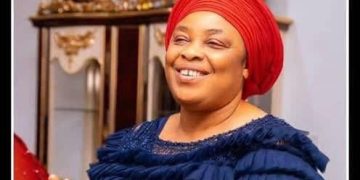
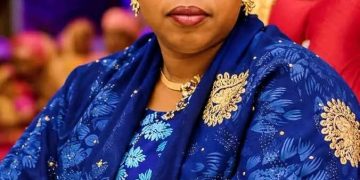
Discussing with Hajia Aisha Bagudu, an Amazon of the 21st century, you will feel the aura of comfort and peace in her presence. A Great woman of substance who radiates humility and confidence. The first lady of Kebbi State, North-western Nigeria and the founder of Mallpai Foundation, established to drive illiteracy out of communities and enriching the minds of the youths for a better future. What more can one expect from this amiable mother of all mothers, a woman with a heart of gold that has brought succour to the lives of the downtrodden. In this exclusive interview with PLEASURES Magazine, Hajia Aisha Bagudu, X-Rays her passion for charity, the challenges of the last 11 years and the future of every girl child in Nigeria.
What inspire Mallpai Foundation?
I went out on a certain day with my driver, and I saw 2 little boys, between the ages of 2 to 5years old. The younger one was crying and the older was pulling him and I was trying to ask why he was crying and the older one said they are on the street begging. So as a mother, I tried to make them get into my car so as to take them back to their malam (Islamic teacher), or to see if I can help them return home. Immediately, the little one wanted to follow me and the older was saying no, that their mallam said they shouldn’t enter anyone’s car. He pulled the younger one back from getting into my car and I was trying to say that I’m not going to steal them, but the older refused. I was holding a sugar cane and I gave it to them and moved our car. Immediately we moved our car, the children started crying. And you know after my father died and was given my inheritance. As a Muslim, they give a female child her portion and a male child his portion. My father was someone that loves giving and helping. Whoever knew my father, knows my father loves charity a lot. Not the charity that you do for the world to see, but the charity that someone else will go and mention to people, and not him telling people, that’s the kind of home I was raised up from. So, I said to myself what will I do with my inheritance and what will I do to make my father proud. So, I started using my inheritance for the NGO, and that is how we built Mallpai Foundation.
As a stakeholder, what is it about the girl education. Is it that they don’t like going to school or there’s no provision?
You know in Africa settings, keeping the men in the front and putting the women behind has been our way of life. Most parents will be more comfortable to send their boys to school than the girls. After all they will say if she completes her education she will eventually end up in someone else’s home. So, this is one of the challenges. So Sometimes if you educate a female child, she will be able to educate that boy you’re sending to school. If you look at it, a mother that is educated, the way she will train her children would be different from the mother that is not educated. When I say education, it doesn’t necessarily mean that the woman must attain master or PhD level.

Wherever the word Northern Nigeria is being spoken, what usually come to mind is the street beggars {almajeris}. Different perceptions about the northerners and their children and begging, what can you say is the core problem of this and what is the solution?
To start with, I won’t say its poverty, nor will I say negligence, but the main reason for children beggars {Almajeris}.you know the almajeri system was working in the past. It’s all about seeking Islamic knowledge. Understand this, begging islamically is not allowed, so when people say it has to do with religion, it’s not true. That aside. People send their children to seek for knowledge and when they send them, that child out, they don’t make provision for them. I always say this, people blame the mallams. I’m not saying they are all perfect.Let’s not put ourselves in a situation where you have 1 to 1,000 children without provision with a mallam that has 2 to 3 wives and 1 to 15 children of his own. Definitely, he has to send them to go get food somewhere, Is he going to leave his children and feed the others, these mallams don’t have salaries, nobody is paying them and the mallam will tell you that he cannot send them away, because in Islam you cannot horde knowledge, you have to spread it and at the same time, Islam did not say you should jam-pack them in one place.
11 years on, are you fulfilled?
Smiles..its been a worthy journey
What is your advice for Amina in Kumasi and Sadiyah in Mali, across Africa and for young people coming up?
Be truthful to yourself, search inside your soul. Do not say because this person is driving a Volvo, I must drive a Mercedes Benz. If you are going to compete with somebody, compete in the right direction. Be respectful and be faithful to yourself and to your people and always put the fear of God in whatever we are doing, it’s very important. With the fear of God and faith, we will be guided through. Let’s disabuse our minds that we have to work in the office. Let’s learn other skills and be empowered. And let us at always pray for our leaders. For us, whenever we abuse or curse our leaders, we are cursing ourselves. This is my advice.
Advice to all mothers in Africa and across the globe?
We should learn to understand our children. Each child is special and different. We should stop creating competition between our children and bring our children close. Let’s listen to them as they talk, then we will guide them so that they will be better than us. Sometimes, we think we know because the world we think we know is different from the one we are living in now. We should learn to stop placing a curse on our children. We should also learn to put our cultures in them. Now, many people are deviating from their cultures and leading the children to cultures that are not theirs.
How do you feel when people appreciate you for contributing to their lives?
When you’re doing something because of God and humanity, you are not expecting anything in return. Like I said, even if it is one person’s life, it’s an achievement. To me, I feel the foundation is getting there. Like you said 5 to 10 years from now, only God in His glory knows where the foundation will be. Not me, not you but only God that can say where He wants us to be. We can only hope for positive things.
How can people reach out to you globally?
By email: mallpaifoundation@gmail.com
Instagram: @mallpaifoundation
Facebook: Mallpaifoundation Mallpai
Twitter: @mallpaiNGO
Web: www.mallpaifoundation.org
SOURCE: Pleasures Magazine