
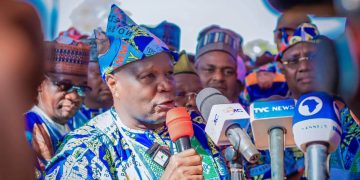
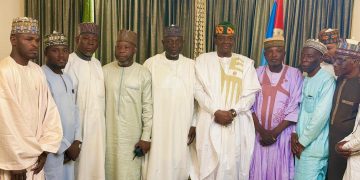
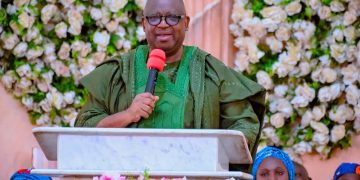
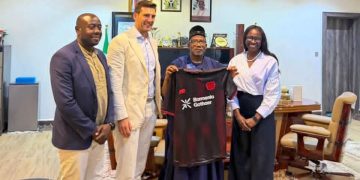









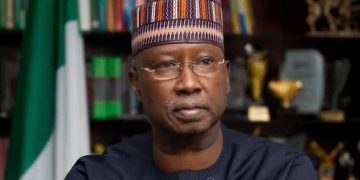

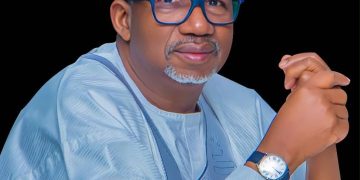






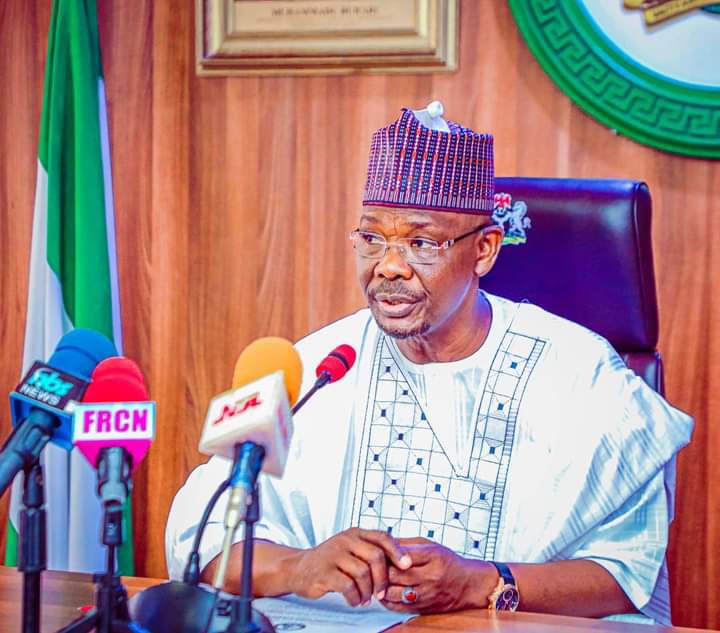
Since the dawn of 2025, Governor Abdullahi A. Sule of Nasarawa State has emerged as a model of vision-driven leadership in Nigeria — a quiet achiever whose pragmatic style is transforming the state’s landscape and redefining governance standards in the North-Central region. From education and agriculture to infrastructure and industrialization, Sule’s touch has been both deliberate and strategic, shaping lives, empowering communities, and strengthening Nasarawa’s position as a critical development hub in the country.
At the heart of his 2025 agenda is a conviction that progress must be both human-centred and sustainable. Nowhere is this clearer than in the education sector, where Nasarawa has embarked on its most ambitious school renewal project in decades. Under a World Bank-backed initiative, the state is renovating 690 existing schools and constructing 30 new ones. This upgrade extends to classrooms, science laboratories, libraries, and water facilities, with special focus on girl-child education through the Adolescent Girls Initiative for Learning and Empowerment (AGILE). Complementing that, the government distributed instructional materials to 418 secondary schools, covering essential subjects and laboratory tools. Governor Sule’s goal is clear: to prepare a generation equipped with the knowledge and confidence to drive tomorrow’s economy.
Agriculture, the mainstay of the state’s economy, has also received new life. In Awe Local Government Area, a 10,000-hectare rice farm at Ayarkeke has become the symbol of Nasarawa’s agricultural resurgence, with 3,300 hectares already under cultivation. The government’s distribution of 23 tractors and agricultural inputs to over 10,000 farmers — alongside a target of 300 tractors for state-wide mechanization — is boosting productivity across the 13 local government areas. To further support smallholder farmers, the state launched a free fertilizer programme in which every ward received 500 bags, while each local government got an additional 100 bags. The result is a farming season with higher yields, lower input costs, and expanded employment opportunities for the rural youth.
Governor Sule’s 2025 budget reflects his administration’s strategic priorities. Education, Science and ICT received the lion’s share, followed by infrastructure, health, and agriculture and water resources. These numbers are more than figures on paper; they are a declaration of intent — an affirmation that human capital, physical infrastructure, and productive sectors must grow together.
The impact of these choices is visible across communities. Children now learn in safer and more dignified classrooms. Women spend less time fetching water, thanks to solar-powered boreholes across rural wards. Farmers earn more as mechanized agriculture cuts drudgery and expands profit margins. Roads under rehabilitation have reduced travel time and transportation costs, stimulating trade and connecting rural producers to urban markets.
Beyond sectoral progress, Governor Sule’s leadership style has become a case study in modern governance — marked by discipline, transparency, and inclusion. His partnerships with federal agencies, international development partners, and private investors have brought not only funding but also accountability and technology transfer. By insisting on engineering standards, financial prudence, and fair distribution, Sule has restored confidence that government can indeed deliver.
Perhaps the most defining infrastructure of 2025 is the Keffi–Nasarawa–Toto–Abaji road — a project that captures the ambition of the administration and the promise of Nasarawa’s future. Initially spanning 118 kilometres, the project was re-evaluated and extended this year to 137 kilometres, connecting Nasarawa to the Federal Capital Territory through Abaji. The extension involves complete reconstruction with new stone base layers, cement stabilization, drainage works, and asphalt overlay built to federal highway standards. Once completed, the road will become one of the North-Central’s most vital commercial arteries, slashing travel time between Keffi, Toto, and Abuja, easing freight movement, and expanding markets for farmers and manufacturers alike.
These developments have not gone unnoticed. Economists and policy analysts point to Nasarawa as a state where governance is tangibly improving lives. The logic is simple: when schools are functional, roads are motorable, and farms are productive, citizens gain confidence, investors take notice, and prosperity becomes self-sustaining. Sule’s combination of industrial discipline and social sensitivity has earned him quiet respect nationally — and it is why many describe him as a national asset.
For Governor Abdullahi A. Sule, the task ahead remains large but promising. The foundations are being laid for a more self-reliant state — one that harnesses its agricultural wealth, human capital, and geographic advantage to drive growth beyond dependence on federal allocations. As his administration continues to roll out infrastructure, upgrade schools, and strengthen local industries, Nasarawa’s bright years are not merely on the horizon; they are already taking shape.
In a political climate often dominated by rhetoric, Governor Sule’s record stands out for its results. He has shown that vision, when backed by integrity and precision, can indeed translate into lasting progress. For the people of Nasarawa, the evidence is clear in their roads, their farms, their classrooms — and in the renewed belief that leadership can still serve the common good.