


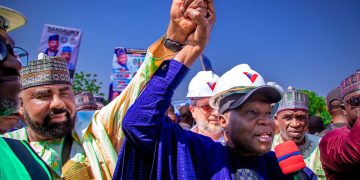
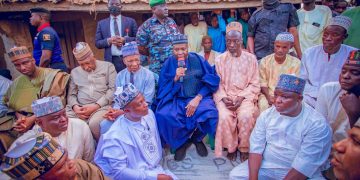

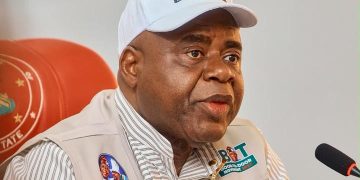
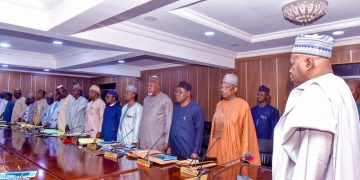























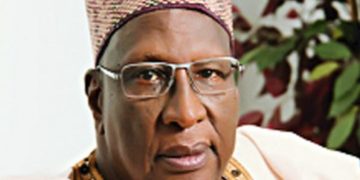

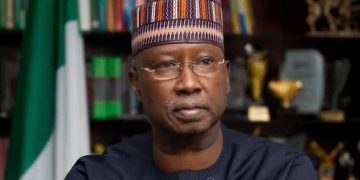














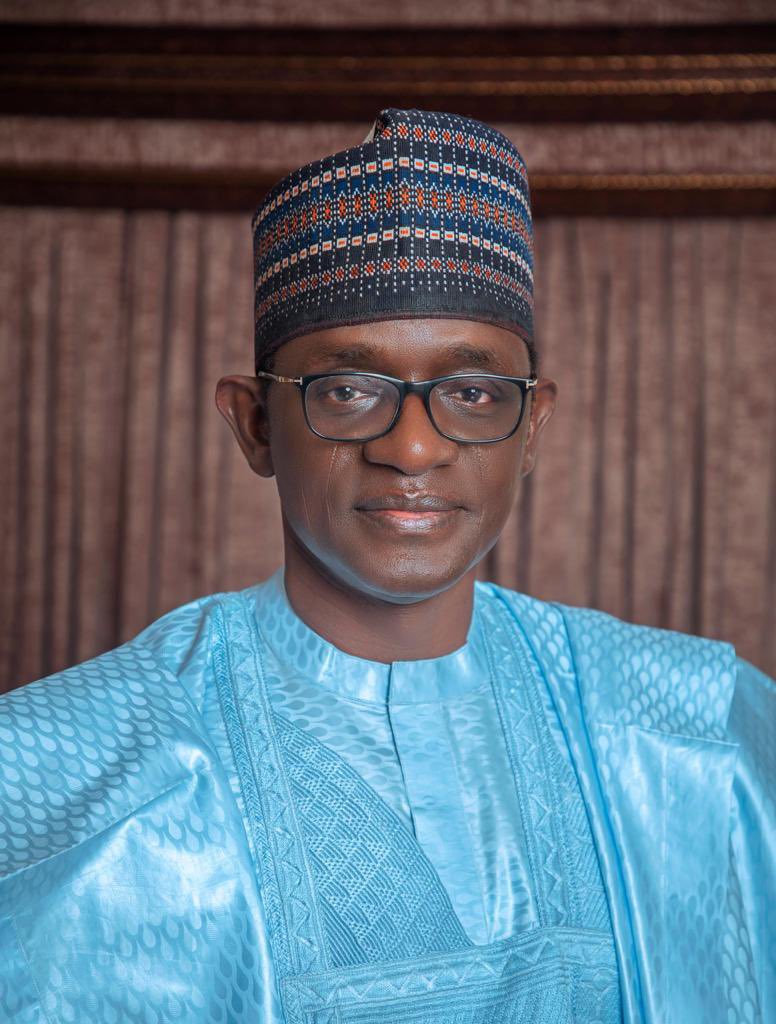
In the political landscape of Nigeria’s North-East, few figures have come to embody resilience and reform quite like Governor Mai Mala Buni, CON. Since assuming office in 2019 and earning the people’s renewed mandate in 2023, Buni has led Yobe State through a delicate period of recovery, reconstruction, and rebirth. His leadership style — measured, inclusive, and people-oriented — continues to set the tone for a state once at the epicenter of insurgency but now gradually reclaiming its pride and potential.
Governor Buni’s administration has become synonymous with purpose-driven governance — anchored on education, healthcare, infrastructure, agriculture, and economic empowerment. These pillars reflect his conviction that no society can progress unless its citizens are educated, healthy, and gainfully engaged. His early declaration of a State of Emergency on Education was not mere rhetoric but a call to action that spurred the renovation of hundreds of classrooms, recruitment of qualified teachers, provision of instructional materials, and the introduction of modern learning facilities across the state. Through the Yobe State Education Trust Fund, scholarships have been awarded to deserving students, while the government has reintroduced teacher training programmes to restore quality to the classroom.
In healthcare, Buni’s policies have been equally transformative. From the revitalization of the Primary Health Care system to the construction and equipping of modern hospitals in major towns, his administration has strengthened access to medical services, particularly in rural and conflict-affected communities. The establishment of the Yobe State Contributory Health Care Management Agency has made affordable healthcare a reality for civil servants and indigent families alike. These initiatives have contributed to reducing infant and maternal mortality rates and improving overall public health outcomes.
Infrastructure development remains one of the most visible hallmarks of his tenure. Under Buni’s watch, Damaturu, the state capital, has been transformed with modern road networks, street lighting, drainage systems, and a renewed urban aesthetic. Similar projects are replicated across Potiskum, Gashua, Nguru, Geidam, and other local government areas. These projects are not only improving mobility and trade but also restoring investor confidence and stimulating economic activity across Yobe State.
Governor Buni’s vision also extends to shelter and social welfare. Through the mass housing schemes executed under the Ministry of Housing and Urban Development, thousands of civil servants and low-income earners have benefited from affordable homes. His administration has also embarked on the rehabilitation of communities displaced by insurgency, constructing homes, schools, and markets to enable displaced families to rebuild their lives with dignity.
Agriculture, the backbone of Yobe’s economy, has witnessed renewed vigor under Buni’s leadership. His government has provided improved seedlings, fertilizers, and mechanized farming equipment to farmers, while also supporting irrigation projects to enhance all-year-round cultivation. The resuscitation of dormant industries — such as the Yobe Flour Mill and the Yobe Sahel Aluminum Company — has complemented his broader agenda to diversify the economy and reduce overdependence on federal allocations.
At the heart of Buni’s governance is a deep sense of empathy. Whether in his swift response to humanitarian crises or his social protection programmes for widows, orphans, and internally displaced persons, he has demonstrated compassion that transcends politics. His leadership style is calm but firm, methodical yet empathetic — traits that have earned him respect beyond party lines.
Governor Mai Mala Buni’s legacy is shaping into that of a unifier and builder — one whose policies reflect foresight, humility, and an abiding commitment to service. His tenure has rekindled hope in a state once tested by adversity, proving that visionary leadership can transform challenges into opportunities.
As Yobe continues its journey of renewal, the imprints of Buni’s leadership — in classrooms, hospitals, farmlands, and communities — remain enduring testaments to a governor who believes that governance is not merely about power, but about purpose, people, and posterity.
_Written by A. A. Mshelia, Public Affairs Analyst from Abuja_