














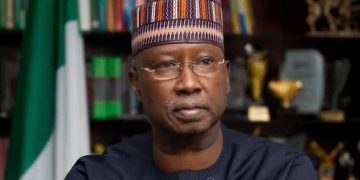
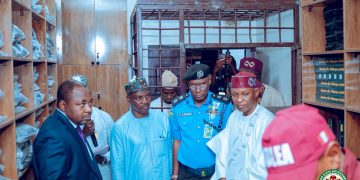








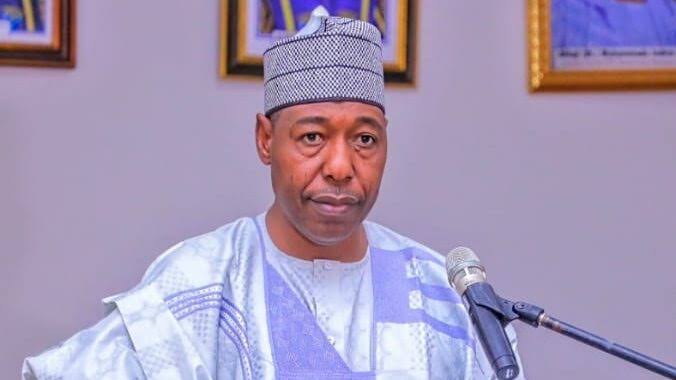
In a time of despair, when insurgency had shattered the very soul of Borno State, one man emerged—not just as a leader, but as a force of nature. Professor Babagana Umara Zulum didn’t inherit a government; he inherited ruins. Yet in just a few years, he has transformed a land devastated by war into a state rapidly rewriting the Nigerian development narrative. His leadership is nothing short of revolutionary.
Zulum’s vision wasn’t built on promises but on concrete, steel, classrooms, and hope. Over 1,200 life-changing projects have been executed under his watch. In just one 12-month period, he completed 238 projects spanning 13 sectors—an achievement unmatched in Nigeria’s recent history. But it isn’t just about the numbers—it’s the scale, speed, and sincerity behind them that continue to captivate Nigerians across every region.
Education, long crippled by terror, became the beating heart of his revolution. Zulum built 104 modern schools and over 3,000 classrooms. He didn’t just reconstruct buildings—he reignited dreams. He slashed the state’s out-of-school population from more than two million to under 700,000, distributing thousands of uniforms, textbooks, school bags, and even bicycles to children once denied the chance to learn. He recruited over 4,000 teachers and equipped schools with modern laboratories, solar-powered ICT centres, libraries, and sports facilities. Where others saw statistics, Zulum saw futures.
In health, his footprint stretches across Borno like a healing balm. He constructed and renovated hospitals, primary health centres, specialist eye and dental clinics, and psychiatric hospitals. From the remotest villages to urban neighbourhoods, access to healthcare has drastically improved. He launched a contributory healthcare scheme to cover the most vulnerable, even as he distributed essential drugs worth hundreds of millions. In response to catastrophic floods, he approved ₦850 million to revive boreholes and restore clean water to thousands of households.
Housing and resettlement became a cornerstone of his rebuilding mission. From Ajiri to Monguno, Bama to Gwoza, thousands of families displaced by terror now live in new homes—fully equipped with schools, clinics, and markets. Over 30,000 homes have been rebuilt or constructed from scratch, turning ghost towns into bustling communities once again. In March 2025, he began constructing 600 new staff houses across five local governments for teachers—proving yet again that rebuilding people comes before politics.
Zulum’s genius lies not just in repairing the past but in designing the future. He is building Africa’s first fully integrated livestock ranch in Mafa, offering homes, grazing land, veterinary services, processing plants, and markets for 461 nomadic families. This single project is redefining how Nigeria approaches pastoralism and food security.
In agriculture, he reactivated the South Chad Irrigation Project and initiated a 2,000-hectare solar-powered farming hub in Baga. These bold steps revived dry-season farming and created thousands of jobs in communities once ravaged by hunger and conflict. He also built vocational centres to train orphans and youth in trades from welding to solar installation, pairing graduation with job placements, and start-up kits.
Even in security, a domain often left to the federal government, Zulum has led from the front. He equipped local vigilantes, Agro-Rangers, and Civilian Joint Task Force operatives with vehicles, weapons, and welfare support. He has visited frontlines, often without heavy escort, defying danger to distribute food, inspect projects, and comfort citizens abandoned by everyone else—except him.
Under Zulum, water access has expanded dramatically. In a single year, over 500 boreholes were drilled, repaired, or maintained in 26 local governments. He electrified rural communities by installing dozens of transformers, building power substations, and launching streetlight projects that restored life to once-dark towns. His roads and transport infrastructure, including a ground-breaking intra-city light rail project in Maiduguri, are setting a precedent in Northern Nigeria.
What makes Zulum exceptional is not just his audacity to build, but his refusal to make excuses. While many leaders drown in bureaucracy, he thrives on results. He cleared over ₦8 billion in pension backlogs, reformed the payroll system to eliminate ghost workers, and introduced biometric data systems for civil servants. Every naira counts, every effort measured, every project tracked.
He doesn’t just supervise from a desk—he visits IDP camps in the dead of night, walks construction sites without notice, and holds town hall meetings in villages no other politician dares to enter. He doesn’t need a convoy to command loyalty; his results speak louder than sirens ever could.
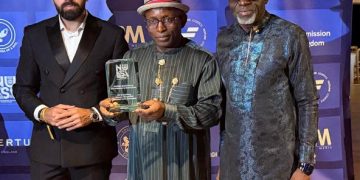
Today, Nigerians from every region ask the same question: *“Why can’t we have our own Zulum?”* He has become a national phenomenon—a benchmark for service, accountability, and visionary governance. Awards from the United Nations, the European Union, and Forbes echo what Borno’s people already know: Zulum is not just a governor. He is a movement.
The truth is stark—whoever comes after him will not just need political experience but divine strength to fill his shoes. He has redefined the expectations of what a governor can do and, in doing so, created a legacy too powerful to fade. His leadership is proof that Nigeria’s problems aren’t insurmountable—they’ve just been mismanaged.
Professor Babagana Umara Zulum is the hero Borno never had and the leader Nigeria desperately needs. He is not just changing his state—he is changing the standard. And in a country yearning for direction, that makes him more than a governor. It makes him a national treasure.