






































By Abubakar al-Sadique
The growing momentum around the 2027 governorship conversation in Bauchi State has continued to generate intense political engagement, but beyond campaign rhetoric lies a deeper question about leadership capacity, economic transformation and inclusive governance. The recent declaration by the Bala Wunti G11 organisation that only the emergence of Dr. Bala Maijama’a Wunti as governor would actualise oil and gas exploration in Bauchi State is not merely a political endorsement; it reflects a broader argument about continuity, competence and vision in the management of strategic resources. When situated within the core values of the Bala Wunti Support Organisation (BWSO) — trust, integrity, innovation, inclusivity and collaboration — the implication of electing Dr. Wunti in 2027 takes on far-reaching developmental significance.
At the heart of the G11’s position is the assertion that Dr. Wunti is uniquely positioned to drive the exploration of oil and gas resources in Bauchi State. As a professional with deep experience in the petroleum sector and as part of the early team that initiated conversations around hydrocarbon prospects in the state, Dr. Wunti represents not just political aspiration but technical insight. The exploration of oil and gas is not a theoretical ambition; it requires negotiation skills, regulatory navigation, industry credibility and investor confidence. The implication of electing a governor with insider knowledge of the sector is that Bauchi State could transition from aspiration to actualisation in the energy landscape, positioning itself among oil-producing states and expanding its internally generated revenue base.
However, resource exploration alone does not define transformation. What distinguishes the Wunti proposition is the linkage between economic opportunity and human capital development. The G11 chairman, Alhaji Hassan Abubakar, highlighted Dr. Wunti’s long-standing personal investments in education, healthcare access and youth rehabilitation. These interventions predate any formal campaign structure, suggesting a track record anchored in trust and integrity rather than transactional politics. In governance terms, this signals a leadership style that recognises that resource wealth must translate into social welfare. The implication is that oil revenue, if realised under his administration, would likely be embedded within a framework that prioritises education, health and youth empowerment rather than elite capture.
Trust remains a fundamental currency in democratic governance. BWSO’s emphasis on trust reflects the belief that public confidence must be earned through consistent action. Over the years, Dr. Wunti’s engagement in scholarship schemes, health interventions and youth empowerment programmes has cultivated a perception of reliability. Electing a leader perceived as trustworthy has implications for social cohesion in Bauchi State, particularly in a context where political distrust often undermines policy continuity. A trust-based leadership could foster greater citizen participation, enhance tax compliance and encourage private sector partnerships essential for sustainable development.
Integrity, another core value of BWSO, speaks to transparency and ethical conduct. Oil and gas exploration, if not managed with integrity, can become a source of conflict, corruption and inequality. The argument advanced by supporters is that Dr. Wunti’s professional background within structured corporate environments equips him with governance discipline and accountability mechanisms that can mitigate such risks. In practical terms, this could translate into transparent licensing processes, community engagement frameworks and clear revenue management systems aligned with global best practices. For Bauchi State, this would mean avoiding the resource-curse narrative that has plagued some regions and instead adopting a model where resource governance strengthens institutions.
Innovation is equally central to the Wunti vision. Bauchi State faces youth unemployment, infrastructural gaps and limited industrialisation. Oil exploration, if integrated with innovative policy thinking, could serve as a catalyst for downstream industries, petrochemical investments and skills development programmes. BWSO’s narrative around innovation extends beyond technology; it includes policy creativity, youth leadership development and modern governance systems. The implication of electing Dr. Wunti is therefore not confined to extraction but encompasses diversification strategies, entrepreneurship incubation and digital governance reforms that align with twenty-first century economic realities.
Inclusivity remains perhaps the most compelling pillar. The activities of BWSO consistently emphasise youth inclusion in governance, mentorship and leadership succession. The bulk of its coordinators and volunteers are young professionals, reflecting a deliberate intergenerational strategy. In a state where a significant proportion of the population is under 35, the inclusion of youth voices in policy processes is not optional but imperative. A Wunti administration, guided by these values, would likely institutionalise youth advisory councils, leadership training initiatives and structured mentorship pathways linking experienced administrators with emerging leaders. The long-term implication is the cultivation of a leadership pipeline that ensures continuity and stability beyond a single tenure.
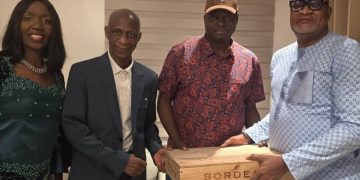
Collaboration completes the framework. The visit by the G11 organisation and the material contributions made underscore a culture of partnership rather than isolation. BWSO was conceived as an umbrella platform for organisations that share common developmental values. In governance, collaboration translates into multi-stakeholder engagement involving civil society, private investors, traditional institutions and development partners. Oil exploration, infrastructure development and social programmes all require cooperative frameworks. Electing a governor who prioritises collaboration could strengthen federal-state relations, attract international investment and encourage community buy-in for major projects.
Beyond economic projections, the symbolism of leadership matters. Dr. Wunti’s professional journey from the energy sector to philanthropic engagement presents a narrative of competence fused with compassion. The public presentation of clothing materials for thousands of orphans and the donation of campaign logistics support reflect grassroots mobilisation that intertwines welfare with political advocacy. While such gestures are part of political culture, the deeper implication lies in the philosophy that development must be people-centred. Governance, under this perspective, becomes an extension of service rather than power accumulation.
The prospect of Bauchi State joining the league of oil-producing states carries fiscal and political implications. Increased derivation revenue could fund road networks, healthcare infrastructure, agricultural mechanisation and educational reform. Yet the sustainability of such gains depends on leadership ethos. If anchored in trust, integrity and innovation, oil wealth could become a springboard for inclusive prosperity. If managed without these values, it risks deepening inequality. Thus, the 2027 election becomes not just a contest of personalities but a referendum on governance philosophy.
BWSO’s consistent emphasis on mentorship and succession further suggests that a Wunti administration would invest in institutional capacity rather than personalised control. Leadership succession planning within public institutions ensures that reforms outlive individual officeholders. By embedding youth in governance processes and cultivating technocratic expertise, the state can build resilient systems capable of navigating future challenges, whether economic volatility or demographic pressures.
Ultimately, the implication of electing Dr. Bala Maijama’a Wunti as governor in 2027 lies in the convergence of sectoral expertise, philanthropic track record and value-driven organisational philosophy. Oil exploration represents a tangible economic objective, but the broader vision encompasses social justice, youth empowerment and collaborative governance. For Bauchi State, the decision ahead is not solely about resource extraction but about selecting a leadership model that integrates economic ambition with ethical stewardship and inclusive development.
As political engagements intensify, citizens will weigh competing narratives. Yet the alignment between BWSO’s core values and the articulated developmental blueprint suggests a governance pathway anchored in trust, integrity, innovation, inclusivity and collaboration. If translated from campaign discourse into policy action, such a framework could redefine Bauchi State’s trajectory in the coming decade, transforming potential into prosperity and aspiration into measurable progress.
Abubakar Al-Sadiqueis the Chief Communication Officer, Bala Wunti Support Organisation (BWSO)