



























































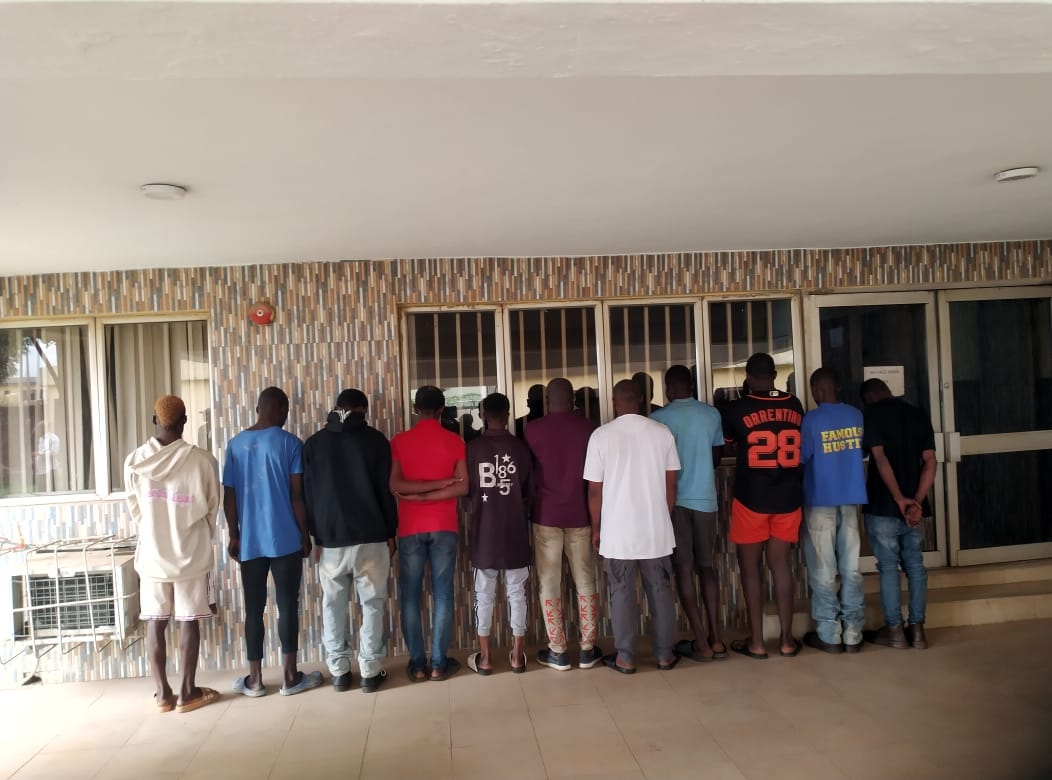
On a quiet day in Uzebu, just off Ekenwan Road, what started as a shopkeeper’s desperate attempt to get help ended with handcuffs, a police van, ESSS operatives, and a family running for their lives.
That shopkeeper is Greg Owenaze Omoregie, 45. A father of four. A man who, until weeks ago, woke up every morning to open a small retail store in Iyanomo with his wife, Orobosa.
Today, the shop is sold. The house on Aigbe Street is empty. And the Omoregies are somewhere in Edo State that even close relatives won’t name out loud.

The story broke into public view on May 13, 2026, when the Edo State government announced a major sweep.
In a statement, the Chief Press Secretary to Governor Monday Okpebholo, Patrick Ebojele, said the Special Security Squad had launched “Operation Flush Out Cultists and Kidnappers” after a young man was shot dead at the University of Benin gate on May 10.
Over several days, operatives moved through Ekosodin, Isihor, Airport Road, Ugbowo, Ogba-Evbuodia, and Uzebu Quarters.
Squad Spokesman Noah Idemudia told journalists that 12 suspected cultists were arrested and handed to the Police Anti-Cultism Unit. Two apartments suspected to be used for initiations, and criminal activities, were sealed. Weapons, symbols, and fetish items were reportedly recovered.
Idemudia was clear on one point: the 12 men were not directly linked to the UNIBEN killing. But intelligence, he said, tied them to different confraternities operating across Benin.
Lost in the official press release was the name of one other man picked up that day as a suspected member of the cult group moving out of the scene of arrest. According to this suspect:
“I Just Wanted The Harassment and Extortion To Stop”
According to people close to the family, the trouble did not start in Uzebu. It started in Iyanomo, at the Omoregies’ shop.
For months, Greg and Orobosa allege they were being targeted. There were daily insults, threats, and robberies. The reason they cite: Greg’s disability, and a refusal to give in to pressure from touts belonging to a group they identified as the Aye Confraternity.
“We pleaded with them, reported to the police and his friends to no avail. Nothing changed,” a relative said, asking not to be named. “So when someone offered to help identify the people giving them problems, Greg agreed.”
That decision led him to Uzebu, with an acquaintance and others. Vigilantes in the area saw the gathering, became suspicious, and alerted authorities. By the end of the day, police had 13 people in custody.
Greg was granted bail. The others were moved for profiling.
But bail did not bring peace. It brought threats to their lives as target or sitting duck for some Aye cult members or the inevitable.
Family members say the threats didn’t stop after the arrests. If anything, the whispers got louder in the community.
Within days, Greg made a choice that many in Benin would understand, but few would want to make: he liquidated everything.
The retail shops were sold off quickly. Furniture, stock, even generators. Then, in the middle of the night, he left with Orobosa and their four young daughters: Michelle, Annette, Joan, and Nancy, ages 5 to 10.
They are not in Benin anymore. They are not at the address on Aigbe Street anymore. They are, as one relative put it, “in hiding, somewhere in Edo, where no one from the old life can find them.
The reason is simple, and stated plainly by the family: fear of reprisal.
This is not happening in a vacuum.
Governor Okpebholo’s administration has made cultism and violent crime a signature fight. The Special Security Squad has been visible in communities, sealing properties and warning community leaders that they will be “held liable” if unlicensed weapons are found in their domains.
In its May statement, the government also flagged Iyanomo in Ikpoba-Okha LGA for a separate intervention over a leadership dispute involving rival groups. The message from Government House was direct: “Edo will no longer be conducive for criminal elements.”
But for families caught between gangs and the state, the line between victim and suspect can blur fast. Greg’s case is one example. He was both the person reporting abuse, and one of the people arrested when the confrontation boiled over.
Legal observers say it’s a common pattern: civilians who try to defend themselves in environments where trust in institutions is low often end up entangled with the same system they called for help.
What does “in hiding” look like for a family of six?
No school. No regular shop. No church on Sunday. The girls, who should be in primary school, are now moving with their parents from one safe place to another.
“They sold everything to survive,” a family source said. “Greg just wants to know his children will wake up tomorrow.”
The family is not asking for money. They are asking for space and silence. Their appeal to the public is careful: if you hear anything about them, contact relatives directly, not through public channels.
As of this week, Greg remains on bail. The police have not announced charges. The 12 other suspects are still undergoing investigation by the Anti-Cultism Unit.
The government says the raids will continue. Community leaders have been warned. Residents have been told not to harbour suspects.
For the Omoregies, the state’s promise of security came too late, or in the wrong way.
A man who tried to protect his shop and his family now has neither. He has bail papers, four children, and a wife, and a decision that he hopes will keep them alive.
In Benin City today, his shop is under new management. His street is quiet. And his name appears in two very different stories: one in a government press release about a crackdown, and one whispered among neighbours about a family that disappeared overnight.
If you have information about the whereabouts of the Omoregie family, you are urged to contact close relatives privately.