































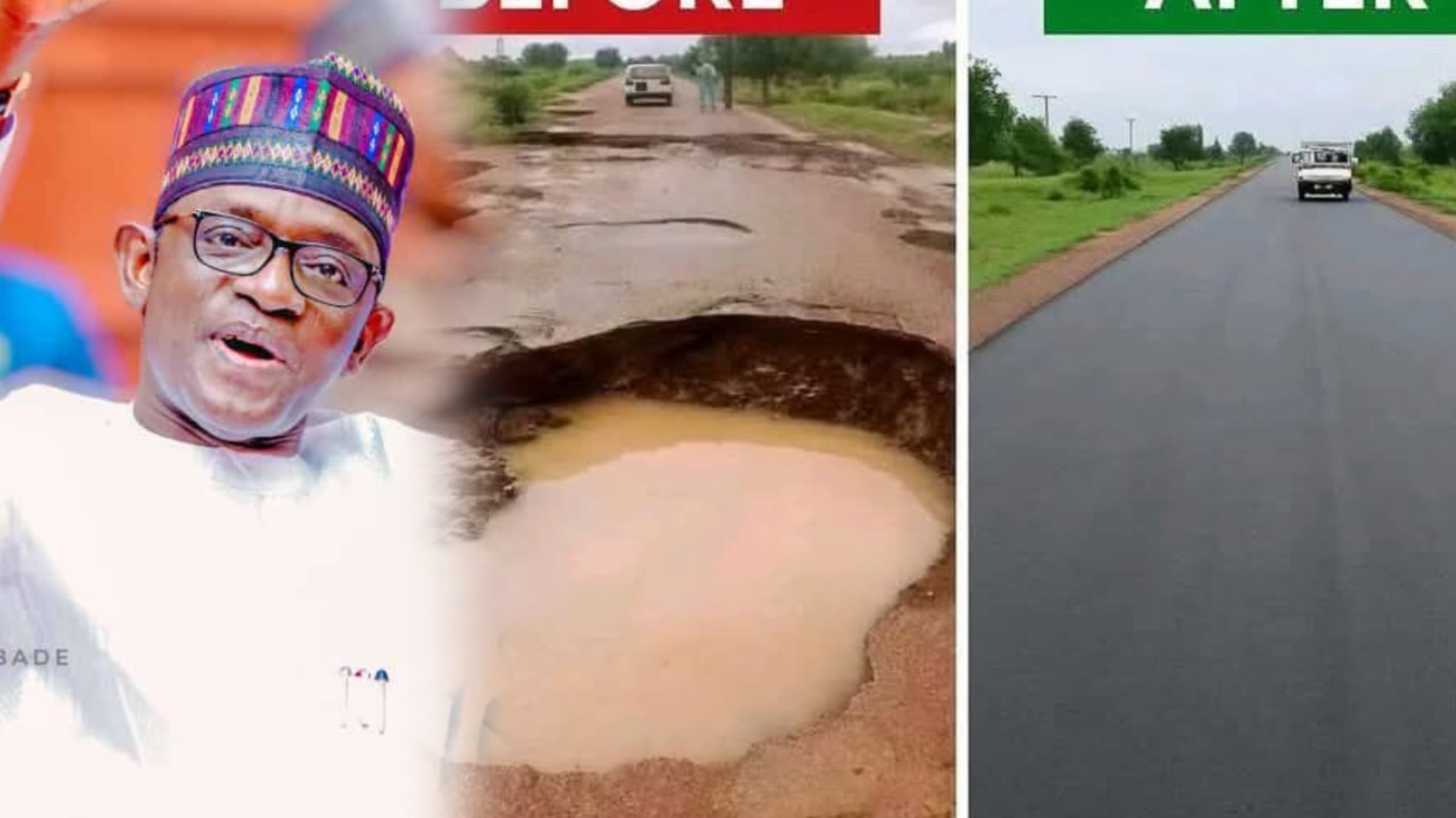
The once-crippling 35-kilometre stretch between Danchuwa and Jajere has undergone a remarkable transformation under the leadership of Governor Mai Mala Buni, CON, marking a milestone in Yobe State’s ongoing infrastructure revolution. The road, which had long been plagued by gaping potholes and dangerously eroded surfaces, now stands as a symbol of development, accessibility, and foresight.
For years, this corridor was infamous for its near-impassable condition. Deep potholes dotted the route, some large enough to trap small vehicles and force travellers to swerve perilously off-course. Transportation costs rose sharply as vehicles suffered regular damage. Worse still, the deteriorating road posed serious security threats, particularly in a region that has struggled with insurgency and banditry. Ambulances and security patrols alike found it difficult to navigate the broken path, further isolating communities along the route.
Today, that grim reality has given way to progress. The newly completed road is smooth, safe, and reliable. Journey times have been cut significantly. Farmers and traders are transporting goods to the market with ease, children are attending school without disruption, and health services are reaching rural areas faster. The relief is almost palpable, and residents have been quick to express their gratitude for the dramatic improvement.
This project is just one of many under Governor Buni’s administration, but it captures the essence of his approach to governance: practical, people-centered, and forward-looking. It also underscores the value of leadership that listens and acts. Despite economic constraints, Governor Buni has prioritized road development not as a luxury but as a critical foundation for security, commerce, and social cohesion.
Since taking office, Governor Buni has commissioned and completed numerous road projects that cut across urban centres and rural communities. Among them is the completed Danchuwa–Garin Bingel road and the 10-kilometre Chumbusko–Tagali route. Other achievements include the dualization of the Abattoir Junction to New Bypass Roundabout in Potiskum and ongoing works on the Damaturu–Kalallawa dual carriageway, a key route linking the state capital to the new international cargo airport.
Significant progress has also been made on the Karasuwa–Galu–Gashu’a and Kukuri–Chukuriwa–Dawasa roads, while the Gashu’a–Masaba and Nguru–Balanguwa corridors are nearing completion. In addition, the governor has launched the construction of township roads and drainages in several local government areas, including Potiskum, Damagum, Buni Yadi, Geidam, and Gashu’a. In Damagum alone, over ₦530 million was invested in township road infrastructure and drainage systems.
Rehabilitation projects have also been tackled with urgency, including repairs on the Katarko–Goniri and Siminti–Godowoli roads, as well as routes in the northern parts of the state such as Geidam–Bukarti and Yunusari–Kanamma.
Governor Buni’s commitment to road infrastructure is not only transforming mobility but also rewriting the story of access and opportunity across Yobe. Roads that once symbolized hardship now carry hope—fueling trade, enabling education, ensuring timely healthcare, and strengthening security.
The Danchuwa to Jajere road may seem like just another project on paper, but to the people who travel it every day, it is nothing short of a lifeline. It is a physical and symbolic reminder that when leadership meets determination, even the deepest potholes of neglect can be filled—and a better path can emerge.
_Written by A. A. Mshelia, Public Affairs Analyst from Abuja._