

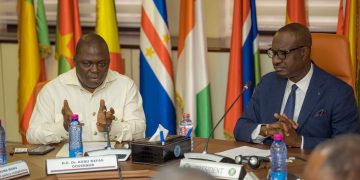


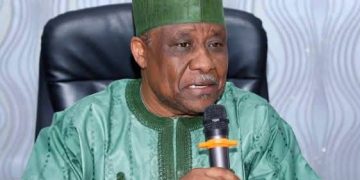





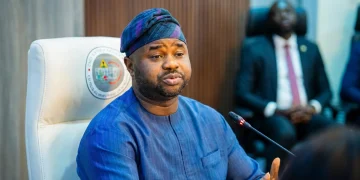











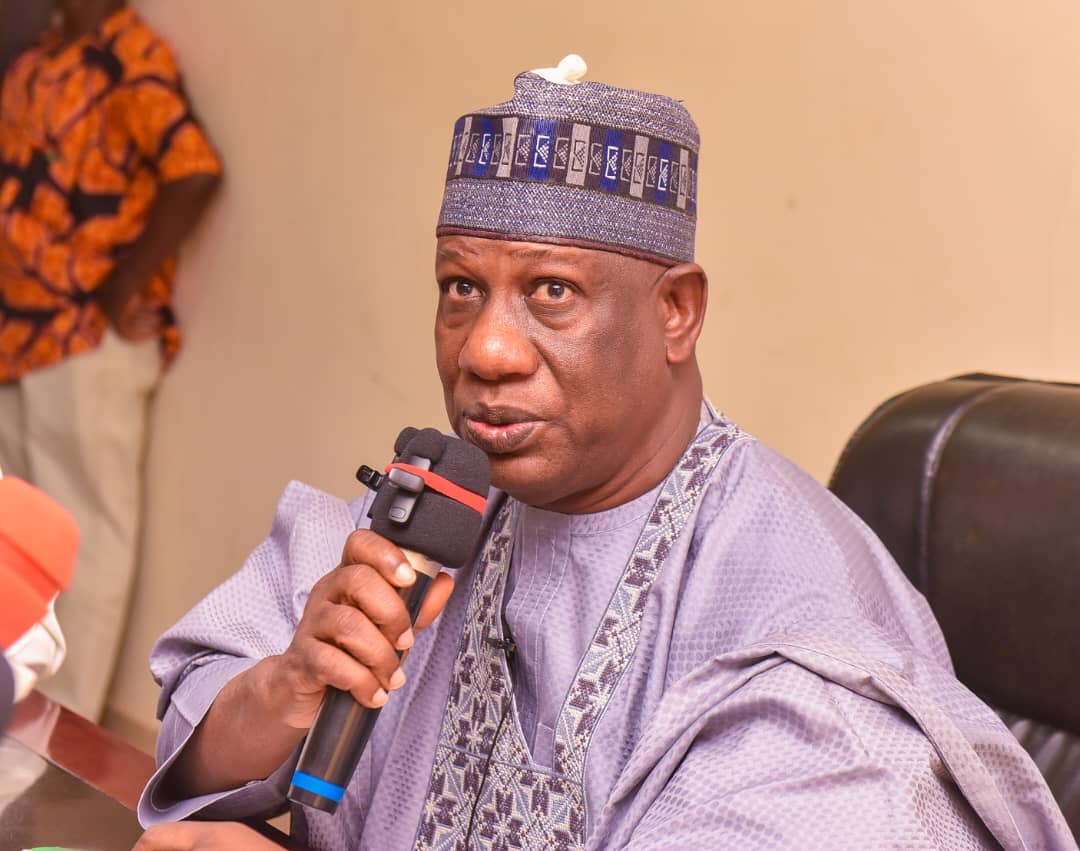
Gombe State Commissioner for Budget and Economic Development, Salihu Baba Alkali, has provided deeper insight into the 2026 Appropriation Bill recently presented to the State House of Assembly by Governor Muhammadu Inuwa Yahaya, CON.
He disclosed that the proposed budget is deliberately designed to accelerate gains in education, health, youth empowerment, agriculture, environmental management, water supply and infrastructure, while also strengthening the State’s investment climate for both local and international investors.
Addressing journalists on the breakdown of the fiscal proposal, the commissioner emphasized that the 2026 budget, tagged “Budget of Consolidation”, reflects the administration’s strong desire to sustain and expand developmental milestones.
Governor Inuwa Yahaya had presented a total estimate of N535.696 billion, a significant rise compared to the N451.661 billion revised budget of 2025.
According to Salihu Baba Alkali, the increased size of the 2026 budget is informed by administration’s renewed commitment to delivering meaningful impact across all sectors.
He noted that the recurrent expenditure for 2026 represents a 29.77% increase and accounts for 30.66% of the total budget size.
In contrast, capital expenditure, critical for long-term development, takes up 69.34% of the budget after recording a 14.25% increase over the previous year.
The commissioner revealed that as of 30th September, the 2025 revised budget had achieved 56.39% implementation.
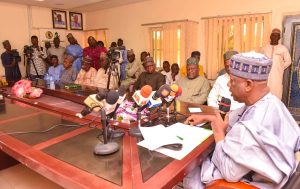
He assured that the Government is on course to pushing the implementation rate toward the 100% mark, reaffirming Governor Inuwa Yahaya’s commitment to prudent, result-oriented fiscal management.
On funding strategies, the Commissioner said State Government has set a target of N39 billion Internally Generated Revenue (IGR) to support the financing of the 2026, fiscal year budget.
Baba-Alkali explained that although the N39 billion IGR target is ambitious, it remains achievable considering the improved performance of the Gombe State Internal Revenue Service in 2025.
According to him, the projected revenue surpasses the N32.7 billion, targeted for 2025 by 19.22 per cent, noting that the revenue service had already exceeded its 2025 target by 103 per cent, as at October.
He stated that the Government has strengthened the service to ensure it meets the new target, adding that revenue from IGR will complement other funds required to sustain and complete ongoing development projects across the State.
He also appealed to residents of the State to support Government initiatives by willingly and regularly paying their taxes.
On other revenue sources for financing the 2026 budget, Baba-Alkali revealed that the state expects N80 billion, from Statutory Allocation, N65 billion, from VAT, and N132 billion, from other FAAC receipts.
He explained that VAT will contribute 25.5 per cent, of total expected revenue, while FAAC receipts will account for 41.77 per cent.
Alkali said the present administration has strengthened the Gombe State Internal Revenue Service through institutional reforms and technology-driven processes aimed at widening the tax net and increasing revenue efficiency.
He described the transformation at the Board as remarkable, noting that internally generated revenue (IGR) has consistently grown over the past five years.
He added that major economic projects initiated by the Governor, including the Muhammadu Buhari Industrial Park and the International Grains and Cattle Market, are expected to significantly boost the State’s revenue profile in the near future.
These, he said, are complemented by broader reforms and investment-friendly policies positioning Gombe as a rising economic hub.
Speaking on ongoing projects, the commissioner emphasized that key initiatives such as the Three-Arm Zone, the renovation of Government House, multiple road networks across Gombe metropolis, and the International Grains and Livestock Market will be completed before the end of Governor Inuwa Yahaya’s tenure.
Alkali described the 2026 Appropriation Bill as a forward-thinking financial blueprint that builds on the successes of previous years while laying a strong foundation for sustained development.
Ismaila Uba Misilli
Director-General
( Press Affairs)
Government House